Les diamants fascinent les gens depuis des siècles ; ils sont réputés pour leur éclat, leur durabilité et leur lien avec les moments les plus marquants de la vie. La plupart d’entre nous ne les voient que sous la forme de pierres taillées dans des bijoux, mais chaque diamant a une apparence très différente à ses débuts.
Comprendre ce parcours, ainsi que la manière dont les diamants sont classés, peut vous aider à prendre des décisions plus éclairées lorsque vient le moment de vendre.
Comment se forment les diamants ?
Les diamants sont composés de carbone et se forment sous l’effet d’une chaleur et d’une pression extrêmes, dans les profondeurs du manteau terrestre. Au fil de milliards d’années, les atomes de carbone s’assemblent pour former une structure cristalline très compacte, donnant naissance à l’un des matériaux naturels les plus durs qui soient.
L'activité volcanique finit par ramener ces diamants près de la surface, où ils peuvent être extraits. De nombreux diamants naturels ont plus d'un milliard d'années, ce qui en fait l'un des matériaux les plus anciens que vous aurez jamais entre les mains.
À quoi ressemblent vraiment les diamants bruts ?
À l'état brut, les diamants ne ressemblent pas aux pierres taillées que l'on retrouve en joaillerie. Les diamants bruts ont souvent l'aspect de pierres ternes et irrégulières, avec un aspect légèrement gras ou givré.
Ils peuvent paraître gris, bruns ou légèrement teintés plutôt que transparents, et ils ne brillent pas car ils ne possèdent pas les facettes précises nécessaires pour refléter la lumière. Seul un faible pourcentage de diamants bruts convient à la joaillerie, ce qui renforce leur rareté.
Les 4 C des diamants
La qualité des diamants est évaluée en fonction de quatre critères principaux, souvent appelés les « 4 C ». Ceux-ci permettent de déterminer à la fois leur qualité et leur valeur.
Carat
Désigne le poids du diamant. Bien que ce critère soit souvent associé à la taille, l'impression de grandeur d'un diamant peut également dépendre de sa taille.
Couper
Désigne la qualité de la taille et du polissage d'un diamant. Cela influe directement sur la façon dont la lumière se reflète à l'intérieur de la pierre et sur son éclat.
Couleur
Mesure le degré d'incolore d'un diamant. Même les diamants qui semblent incolores peuvent présenter de subtiles nuances de jaune ou de brun.
Clarté
Ce terme désigne les caractéristiques naturelles présentes au sein du diamant. La plupart ne sont pas visibles à l'œil nu, mais elles jouent néanmoins un rôle dans la classification. Elles peuvent se présenter sous la forme de minuscules taches, de lignes à peine perceptibles ou de zones opaques. Dans de nombreux cas, elles ne sont pas visibles sans grossissement. Les diamants dits “ sans défaut à l'œil nu ” semblent limpides à l'œil nu, même s'ils présentent des inclusions mineures lorsqu'on les observe au grossissement.
Le carat : comprendre la différence entre le poids et la taille
Le carat désigne le poids d'un diamant, et non sa taille physique, bien que ces deux éléments soient souvent liés. Un carat équivaut à 200 milligrammes.
Les diamants de grande taille sont plus rares, ce qui augmente leur valeur, en particulier lorsqu'ils atteignent des poids symboliques tels que 0,50, 1,00 ou 2,00 carats. Cependant, deux diamants de même poids en carats peuvent paraître de taille très différente selon leur taille.
Le rôle de la découpe
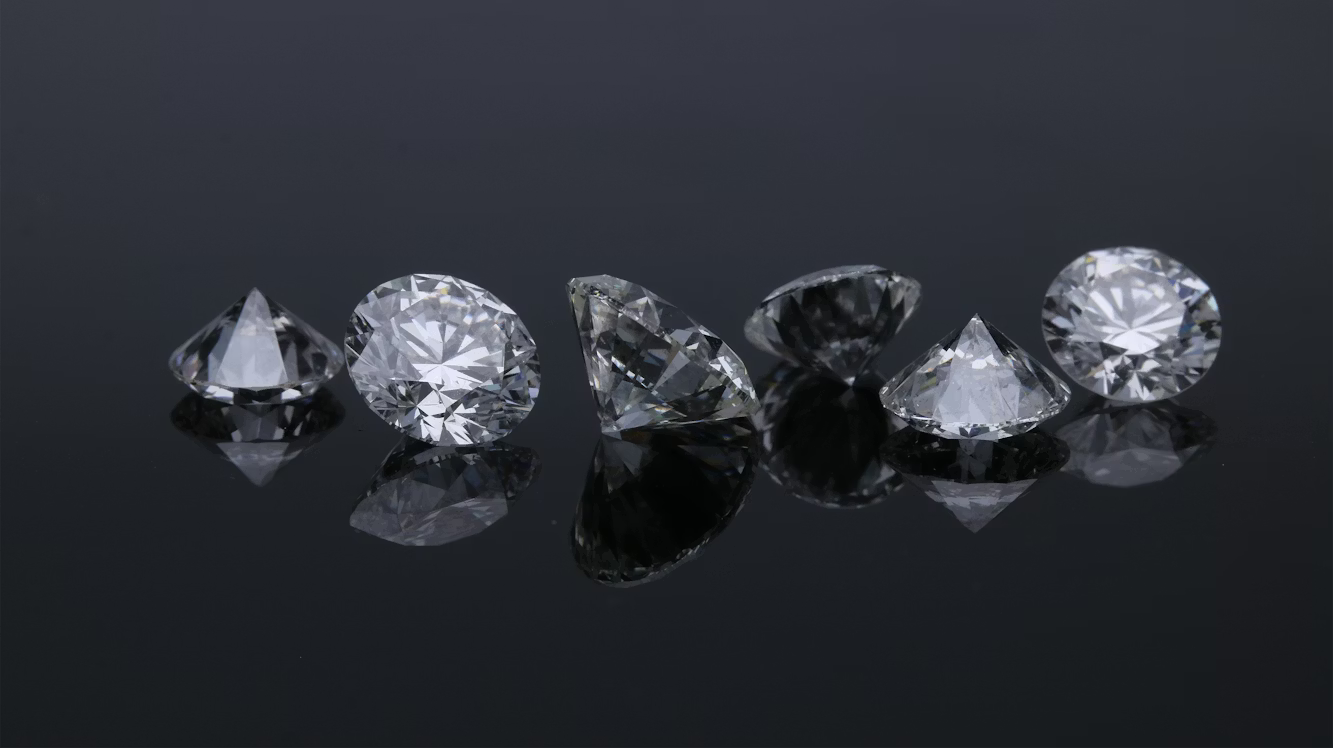
La taille détermine l'efficacité avec laquelle un diamant reflète la lumière, ce qui en fait l'un des facteurs les plus importants pour son aspect.
Une fois extrait, le diamant est soigneusement taillé et poli pour obtenir une pierre finie. Ce processus crée des facettes aux angles précis, permettant à la lumière de pénétrer, de se réfléchir à l'intérieur et de revenir vers l'œil. Un diamant bien taillé paraît brillant et éclatant.
La façon dont un diamant est taillé peut également influencer sa taille apparente ou son éclat. Par exemple, un diamant à taille profonde peut paraître plus petit qu’un diamant bien taillé. Il arrive parfois que le tailleur sacrifie la qualité de la taille pour conserver le poids de la pierre. À l’inverse, un diamant à taille peu profonde peut paraître plus gros qu’un diamant bien taillé, mais comme il ne reflète pas parfaitement la lumière, il peut ne pas présenter le même éclat qu’un diamant bien taillé. C’est pourquoi toutes les pierres de même poids, de même couleur et de même pureté n’ont pas la même valeur.
Couleur : pourquoi les diamants ne sont pas toujours incolores
La couleur permet de déterminer à quel point un diamant semble incolore. Alors que beaucoup s'attendent à ce que les diamants aient un aspect « glacé » ou transparent, la plupart des diamants naturels présentent de subtiles traces de couleur. La couleur des diamants est classée en les comparant à des pierres dont la couleur est connue, sous un éclairage contrôlé et dans des conditions d'observation précises.
L'échelle de classification standard du secteur va de D à Z :
- D–F : Incolores. Ce sont les plus rares et elles ne présentent aucune trace de couleur.
- G–J : Presque incolores. Ils restent incolores dans la plupart des contextes, notamment en joaillerie.
- K–M : Couleur pâle. Une légère teinte chaude peut être perceptible, en particulier sur les pierres de grande taille.
- N–Z : Teinte jaune ou brune visible.
Dans leur forme la plus pure, les diamants dotés d'une structure carbonée parfaite sont incolores. La couleur des diamants est due à des impuretés (par ex. jaune, bleu), à des défauts structurels (par ex. rouge, rose), à un rayonnement naturel au sein de la Terre sur des milliards d’années (par ex. vert) ou à la présence de grandes quantités d’inclusions microscopiques (par ex. noir, blanc). Un même diamant peut présenter plusieurs de ces caractéristiques, ce qui donne lieu à une combinaison de couleurs telles que “ vert bleuté ” ou “ jaune brunâtre-verdâtre ”.
En règle générale, les diamants incolores étant plus rares que ceux présentant une couleur très faible ou légère, plus un diamant est incolore, plus il a tendance à avoir de la valeur.
Lorsque la saturation de la couleur d’un diamant dépasse le grade Z et devient suffisamment prononcée pour être clairement perceptible, il est classé comme diamant de couleur fantaisie. Cependant, tous les diamants de couleur fantaisie ne sont pas plus rares que les diamants incolores. La valeur d’un diamant de couleur fantaisie dépend fortement de la couleur spécifique qu’il présente. Par exemple, un diamant incolore (D, E, F) est plus rare et plus précieux qu’un diamant de couleur « fancy » brun présentant les mêmes cotes de poids en carats, de taille et de pureté. En revanche, un diamant de couleur « fancy » rose serait bien plus rare et nettement plus précieux dans ces mêmes conditions.
La pureté : les caractéristiques naturelles d'un diamant
La pureté fait référence à la présence de caractéristiques internes (inclusions) et de marques superficielles (imperfections). Presque tous les diamants naturels contiennent des inclusions d'une forme ou d'une autre, qui se sont formées au cours de leur genèse.
Celles-ci peuvent se présenter sous différentes formes :
- Petits points : de minuscules points qui ressemblent à des taches
- Nuages : amas de très petites inclusions pouvant former une zone brumeuse
- Plumes : fines fractures internes d'aspect effiloché
- Cristaux : petits minéraux emprisonnés à l'intérieur du diamant
- Aiguilles : inclusions fines et allongées
Les diamants sont classés sous un grossissement de 10x, ce qui signifie que de nombreuses inclusions ne sont pas visibles à l'œil nu.
Les grades de pureté vont de « Flawless » (FL), où aucune inclusion n’est visible à la loupe, à « Included » (I1–I3), où les inclusions peuvent être visibles à l’œil nu et peuvent affecter l’aspect ou la durabilité du diamant.
Entre ces deux extrêmes, on trouve des grades courants tels que :
- VVS (Very Very Slightly Included) : Inclusions extrêmement difficiles à distinguer
- VS (Very Slightly Included) : inclusions mineures, généralement invisibles à l’œil nu
- SI (Slightly Included) : Peut être visible à la loupe, parfois à l'œil nu pour les pierres de grande taille
Un terme souvent utilisé dans la pratique est « eye-clean », ce qui signifie que le diamant semble limpide à l'œil nu, même s'il comporte des inclusions. Des inclusions plus importantes ou des nuages denses peuvent réduire l'éclat du diamant ou lui donner un aspect légèrement terne ou laiteux.
Traitements des diamants : amélioration de la couleur et de la pureté
Certains diamants font l'objet de traitements visant à améliorer leur aspect, notamment leur couleur ou leur pureté. Ces traitements peuvent donner à un diamant un aspect plus pur ou plus attrayant qu'à l'origine.
Parmi les traitements courants des diamants, on peut citer :
- Perçage au laser
- Remplissage des fissures
- Traitement à haute pression et haute température (HPHT)
- Irradiation
- Traitements de revêtement
Certains traitements sont permanents, tandis que d'autres peuvent être altérés par la chaleur, des réparations ou l'usure quotidienne au fil du temps. Les diamants traités se distinguant des pierres naturelles non traitées, leur valeur est généralement différente sur le marché secondaire.
Des analyses professionnelles sont souvent nécessaires pour identifier certains traitements, d'autant plus que les améliorations peuvent ne pas être visibles à l'œil nu.
Vendre son diamant : à quoi s'attendre
Au moment de la vente, les diamants sont évalués en tenant compte de l'ensemble de ces facteurs, et non pas uniquement de leur taille ou de leur apparence à première vue.
Chez Canada Gold, chaque diamant est évalué individuellement par des professionnels qualifiés. Nous prenons en compte les 4 C, ainsi que l'état du diamant, la qualité de la fabrication et la demande actuelle du marché, afin de vous proposer une offre équitable et compétitive.
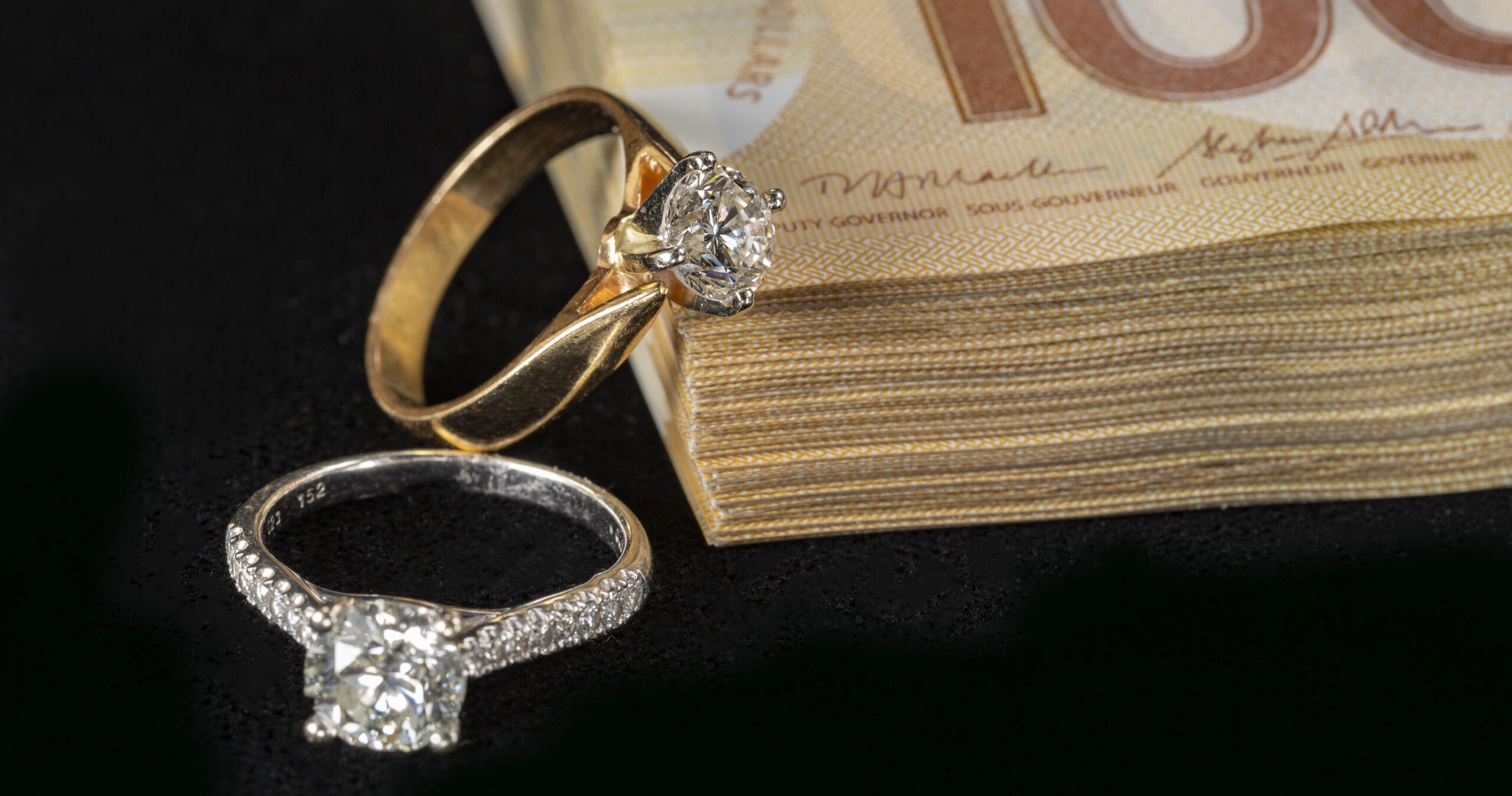
Nous rachetons une large gamme de bijoux en diamants, notamment des bagues de fiançailles, des boucles d’oreilles, des bracelets et des pierres non montées. Certaines pierres précieuses de couleur peuvent également être prises en considération au cas par cas.
Nous n’achetons pas de diamants bruts ou non taillés, de pierres traitées ou améliorées, ni de diamants synthétiques. Nous nous concentrons sur les diamants naturels pouvant être revendus sur le marché secondaire.
Que votre diamant soit une petite pierre d’accompagnement ou une pierre centrale de plus grande taille, notre équipe vous propose une procédure simple, des explications claires et un devis sans engagement. Si vous décidez de poursuivre la transaction, le paiement est immédiat, ce qui vous permet d’aller de l’avant en toute confiance.