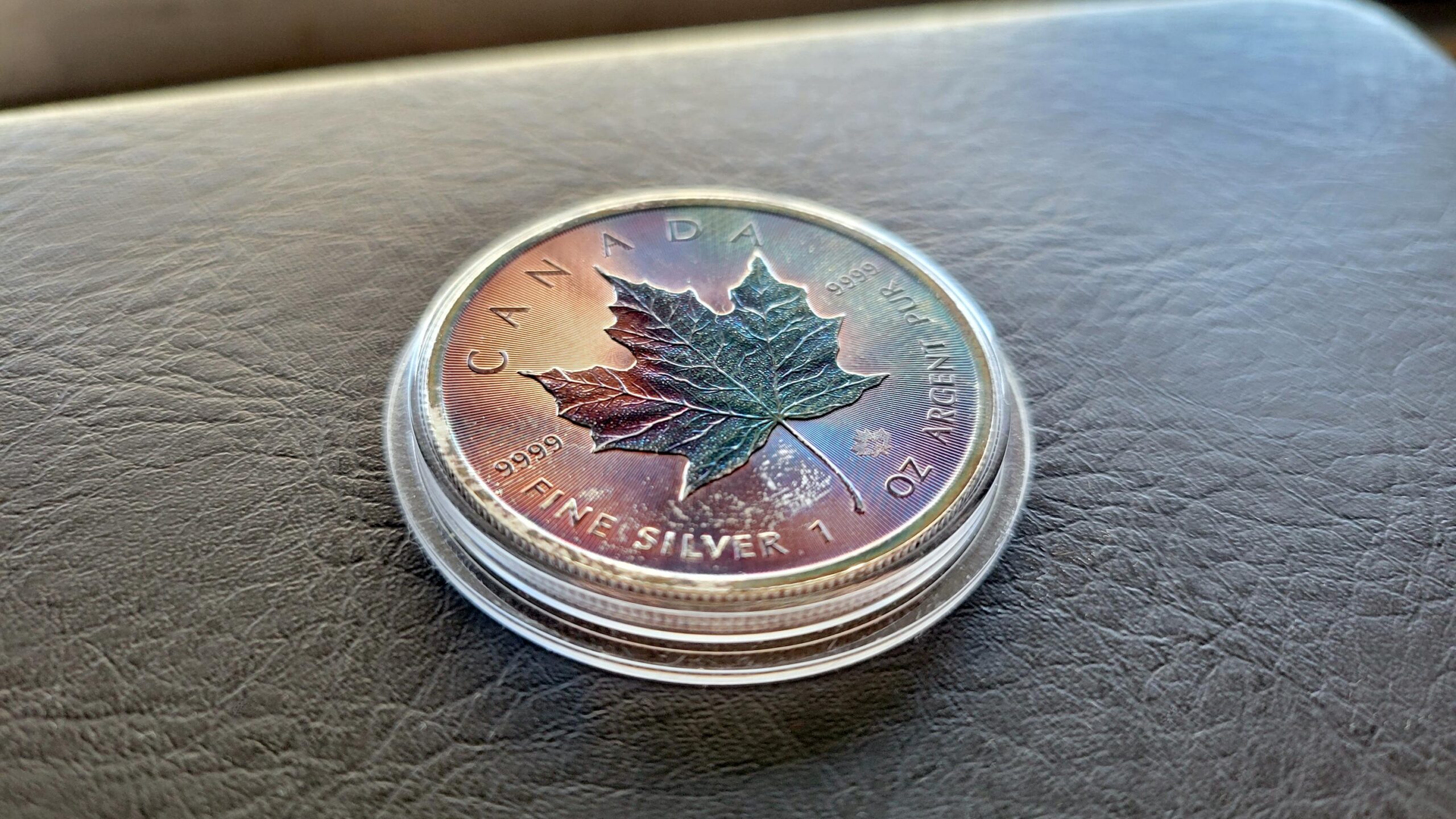
You’ve purchased a beautiful, shiny silver bar or coin, but after a while, you notice something different. Maybe it’s developing a yellowish tint, some cloudy white spots or even a rainbow of colours across its surface.
Or perhaps you’ve just purchased a new piece of silver bullion and noticed that it doesn’t look quite like the others.
Should you be concerned? Has something happened to your silver? Most importantly, does this affect its value?
The good news is that changes in the appearance of silver bullion are common and don’t necessarily mean there’s anything wrong with your investment.
Let’s take a closer look at why silver changes appearance, what those changes mean and how to care for your precious metals.
Why Does Silver Tarnish or Change Colour?
Silver is a naturally reactive metal. Over time, exposure to certain substances in the environment, particularly sulphur-containing compounds in the air, and even oxygen, can cause its surface to change colour.
This process is commonly called tarnishing or toning.
Toning can produce a surprising variety of appearances, including:
- Yellow or golden hues
- Brown or grey patches
- Blue or purple colouring
- Beautiful rainbow-like patterns
- Darker areas that develop over time
The colours and patterns depend on environmental conditions and the way the silver’s surface reacts with them.
Some silver may develop noticeable toning relatively quickly, while other pieces can remain bright and shiny for years.
Interestingly, some coin collectors actively seek out naturally toned silver because of its unique colours and patterns. What one person sees as tarnish, another might see as a beautiful characteristic!
What Are Milk Spots on Silver Coins?
Another common feature of silver bullion is the appearance of small white or cloudy marks, often called milk spots.
Unlike traditional tarnishing, milk spots can be associated with factors involved in the manufacturing process, as well as handling and storage.
The Royal Canadian Mint has extensively researched this phenomenon. In its article Solving the Silver Bullion White Spot Problem, the Mint explains that white spots have been a longstanding concern in the global bullion industry.
Its research identified several contributing factors, including how silver reacts with contaminants during processing, handling and storage.
Importantly, milk spots do not change the silver’s purity or precious metal content.
In fact, the Royal Canadian Mint developed an innovative technology called MINTSHIELD™, introduced in 2018, to significantly reduce the occurrence of milk spots on its Silver Maple Leaf bullion coins.
While this technology helps protect the appearance of silver coins, it doesn’t guarantee that spotting will never occur.
Why Might Brand-New Silver Look Different?
When purchasing investment-grade silver bullion, you may notice that not every bar or coin looks identical.
Some have brilliant, reflective finishes, while others may show slight differences in texture, surface appearance or colour.
These differences can result from manufacturing, handling, packaging, storage or natural chemical reactions.
Silver bullion is produced for its precious metal content, and minor cosmetic variations do not automatically indicate a defect or problem with its authenticity.
The Royal Canadian Mint’s research reinforces this important distinction, noting that white spots on bullion coins do not change their purity or composition.
So, if your new silver has a few white spots or some unexpected colouration, it doesn’t necessarily mean you’ve received an inferior product.
Does Tarnishing or Toning Affect the Value of Silver?
This is one of the most common questions customers ask, and the answer depends on the type of silver you own.
For standard investment-grade silver bullion, value is primarily determined by the weight and purity of the precious metal, along with current market prices.
Normal toning or milk spots do not change the amount of silver contained in a bar or coin.
However, there is an important distinction between investment-grade bullion and collectible or numismatic coins.
Collectible coins may carry additional value based on their rarity, condition, finish or collector demand. In these cases, appearance can influence the price, sometimes significantly.
Even with bullion, certain buyers or dealers may place different premiums on pieces depending on their condition and appearance.
For customers purchasing silver primarily for its precious metal content, the most important factors remain authenticity, weight and purity.
Should You Clean or Polish Tarnished Silver?
It can be tempting to polish a tarnished silver bar or coin to restore its original shine.
Our recommendation is simple: avoid cleaning or polishing your investment-grade precious metals.
Silver is relatively soft, and abrasive cleaning methods can scratch the surface, damage the finish or remove tiny amounts of metal.
For collectible coins, cleaning can also significantly reduce their desirability and value.
The Royal Canadian Mint’s Coin Care Guide offers similar advice:
“Even wiping coins with a soft cloth may damage their finish”
Instead, handle your silver carefully, avoid unnecessary contact with its surfaces and store it in appropriate protective packaging in a cool, dry environment.
A little natural toning is generally preferable to damage caused by an attempt to remove it.
Choosing Silver Bullion at Canada Gold
At Canada Gold, we understand that every customer has their own preferences.
Some customers love the look of perfectly shiny silver bars, while others enjoy the unique character of toned coins. Some collectors are particularly interested in finding bullion coins featuring different designs or images.
When visiting a Canada Gold location, you’re welcome to ask our Precious Metals Analysts about the silver bars and coins currently available.
Depending on inventory and how busy the store is, our team may be able to accommodate requests for particular designs or appearances.
We’re always happy to answer questions and help customers better understand the precious metals they’re purchasing.
The Bottom Line: Your Silver Doesn’t Have to Be Shiny to Be Valuable
Silver is a fascinating precious metal, and changes in its appearance are often a normal part of owning it.
Whether your silver develops a golden tint, rainbow toning or a few milk spots, these cosmetic changes don’t alter its underlying precious metal content.
The most important thing is to understand what you’re purchasing, care for it appropriately and remember that the appearance of investment-grade bullion is only one part of its overall value.
Have questions about your silver bars or coins? Visit your nearest Canada Gold location and speak with one of our knowledgeable Precious Metals Analysts. We’re always happy to help you feel informed and confident about your precious metals.